How to Move Heavy Gym Equipment

This guide explains how to move heavy gym equipment by assessing the load, route and handling method before anything leaves the floor. If you are researching how to move heavy gym equipment by yourself, separate safe preparation from lifting: working alone is not a suitable default for heavy or unstable machinery. Related services and planning resources include gym equipment removals in London, home gym moving, basement and rooftop gym moving and the gym access checker. Read more equipment-specific advice in our moving guides.
Use real weights rather than a universal lifting limit
There is no single weight that makes every solo lift safe. UK manual handling guidance does not provide a universal legal maximum that authorises a particular task. Obtain the machine’s actual specification and account for attached weights, attachments and any modifications. Reach distance, posture, grip, repetition and the consequences of losing control all affect the assessment. Equipment can be unsafe to handle alone even when its mass sounds modest, particularly if it hides the floor ahead.
Make a written record rather than relying on memory. Include the model reference, overall dimensions and the condition of vulnerable surfaces before work starts. Photograph both ends of the route, including door closers, radiators and changes in floor level. Check that children, pets and other building users can remain outside the working area. Someone must have authority to stop the job if the actual conditions differ from the plan; a delivery deadline is not a reason to continue with an uncontrolled load.
- Confirm the exact model and obtain its instructions.
- Record access, condition and any missing parts.
- Stop if the proposed method cannot control the equipment.
Check access and the supporting surfaces
Measure the narrowest openings, turning spaces, stair geometry and lift entrance, including the space occupied by protection. Check lift capacity and building rules with the responsible manager. For basements and rooftops, consider floor suitability, weather exposure, edge protection and access control before planning any transfer. Do not infer structural capacity from the fact that equipment previously stood nearby. Ask an appropriately competent person to resolve uncertain floor or structural loading before moving a concentrated load onto it.
Measure the usable opening, not simply the door leaf or the width shown on a property plan. Allow for wrapping, hands and the space needed to turn without trapping fingers. At bends, consider the complete swept path, including anything projecting above or behind the main frame. Confirm the destination is ready before disturbing the starting position. If a route depends on removing a door or using a shared entrance, arrange permission and responsible supervision before moving day.
Reduce the load through permitted dismantling
Separate loose weights and approved accessories first. Dismantling can reduce handling demands, but an unsupported frame can become less stable as crossmembers are removed. Follow the manufacturer’s order and support components before releasing structural fixings. Stack machines may contain tensioned cables and heavy plates requiring a specified securing or removal procedure. Do not pull a selector pin and assume the stack is immobilised. Leave gas struts, springs and hidden tensioning arrangements to someone competent in the specified procedure.
Use the manufacturer's instructions for the exact model and revision. Similar looking machines can have different fasteners, electrical connectors and structural joints. Photograph each stage and label both sides of a connection before separating it. Keep removed hardware with its own component, away from children. Never loosen a loaded structural joint or release a spring, gas strut or tensioned cable without the specified support and procedure. If the instructions are missing or unclear, pause and obtain competent advice.
Choose straps, skates and protection for the task
Lifting straps do not reduce a machine’s mass or turn an unsuitable lift into a safe one. Use them only with appropriate training, suitable attachment points and a planned escape from the load. Furniture skates need adequate ratings, a stable load and a sound, level route; they are not automatically suitable for thresholds or stairs. Protect stair treads and nosings with secured materials that preserve grip. Never use improvised plywood ramps or domestic castors for an unassessed heavy transfer.
Protection must remain secure while people are working. Loose blankets underfoot can slip, and thin cardboard does not spread a concentrated wheel load reliably. Check that any floor covering is compatible with the finish, keep joints flat and leave thresholds visible. Do not fix adhesive directly to upholstery, painted frames or polished surfaces. Inspect the protection again after the first movement: a shifted runner or caught edge should be corrected before the next part of the job starts.
Decide when working alone must stop
Solo preparation may include photographs, measurements, clearing routes and bagging already removed lightweight accessories. Stop before lifting if you cannot control the whole load, see the route, reach a safe set-down point or avoid crush zones. Stairs, slopes, suspended loads, unstable frames and difficult vehicle transfers need a properly assessed method, not remote advice as a substitute for help. Having a phone nearby is sensible but does not control the immediate risk of a machine tipping onto you.
Agree the sequence and stopping points with everyone involved before touching the equipment. Use clear commands from one nominated person and keep communication possible throughout. Hands and feet must stay away from pinch points, hinges and the underside of suspended parts. Never try to catch a falling machine. If balance changes unexpectedly, stop using the agreed controlled method and reassess; adding an extra person at the last moment does not repair an unsuitable route or lifting arrangement.
How to move heavy gym equipment by assessing the load
Establish mass and instability hazards
Confirm the model-specific requirements and document the current condition before starting.
Assess every access transition
Prepare a clear working area and obtain the instructions, protection and competent help required.
Prepare only permitted removable parts
Follow the permitted sequence, label components and keep unsupported or moving parts controlled.
Use an assessed handling arrangement
Use the assessed method, maintaining stable support and keeping people clear of crush zones.
Secure, reinstall and check stability
Reconcile parts and complete the specified checks before returning the equipment to use.
Plan each transfer and the vehicle loading point
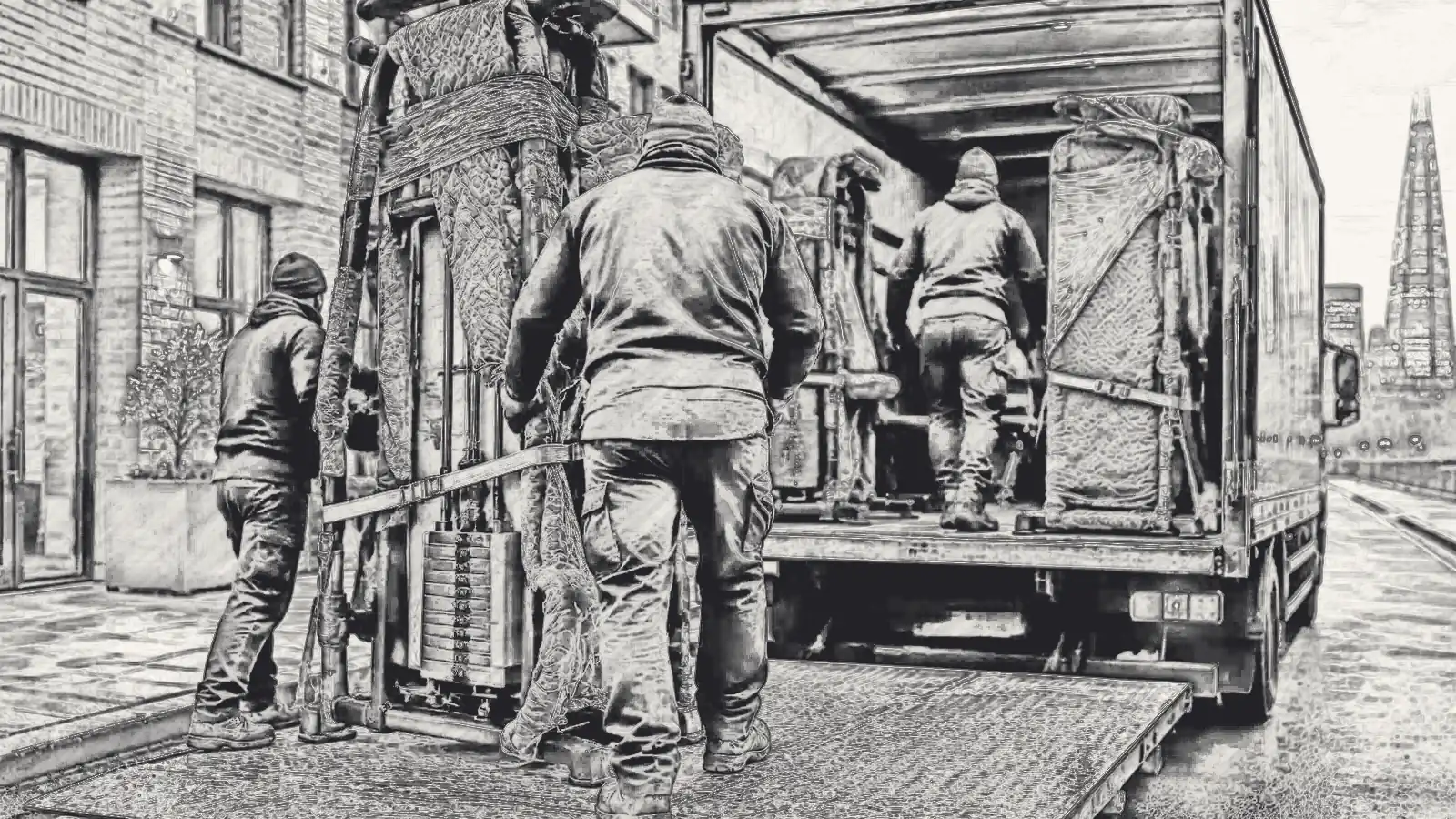
Assess the pickup from the floor, doorway transitions and loading separately. A suitable moving aid on a level floor may be unsuitable at a kerb, tail lift or ramp. Confirm equipment capacities for the way they will actually be used, including load distribution and manufacturer restrictions. Do not exceed vehicle payload or assume the tail lift rating alone validates the transfer. Keep people away from the downhill side and exclude pedestrians from the loading area before work begins.
A vehicle's available space is only one part of the transport decision. Check payload, axle loading, anchorage ratings and the suitability of ramps or lifting equipment. Include packing materials and every separate component in the load assessment. Keep access to restraints available and protect straps from sharp edges. Do not use trim panels, grab handles or unverified fittings as load anchors. Where a safe loading arrangement cannot be established, change the vehicle or book a suitably equipped moving service.
Restore stability and inspect before reuse
Assemble the machine on the intended supporting surface and refit stabilisers, crossmembers and other required restraints before use. Follow the model’s levelling and anchoring instructions; anchoring may need competent assessment of the substrate. Check for distorted brackets, damaged threads and cable displacement after moving. Do not compensate for a rocking frame with loose scraps of material. Keep the machine isolated or clearly labelled out of service until stability, connections and the manufacturer’s functional checks have been confirmed.
Record what has been completed and what remains out of service. Keep loose accessories together and make sure another person cannot mistake a partly finished installation for equipment ready to use. Replace any missing, damaged or incorrect fasteners with the specified parts rather than convenient substitutes. Any electrical fault, damaged cable or uncertain structural connection needs assessment before use. Start functional checks only after the machine is stable, correctly assembled and clear of packaging and tools.
Give GymMovers.co.uk the details needed to assess help
Explain the heaviest component, not just the overall inventory. Include photographs of labels, access pinch points and any dismantling already attempted. Basement turns, external steps and rooftop access should be disclosed before a method is proposed. GymMovers.co.uk can discuss a suitable scope for moving heavy equipment rather than encouraging a risky solo attempt. Ask what handling arrangements, protection and reassembly checks are included, and arrange building permissions separately where required before confirming the date.
Send the same information to everyone quoting so that the proposed scope can be compared fairly. Include photographs, model details, access restrictions, parking arrangements and the required completion date. Ask what dismantling, packing, transport, reassembly and checks are included, and disclose anything already damaged or incomplete. Confirm arrangements for building access and any third party approvals in writing. A useful quotation identifies the work and assumptions clearly rather than leaving difficult access or unfinished assembly to be resolved on the day.
What our customers say
Verified 5/5 Google feedback for Removals & Storage Experts Ltd (Removals and Storage X).
“Simply brilliant — thank you for a seamless service right from collection, storage, and delivery. 100% recommend if you want peace of mind during your move and want to work with a company that’s highly coordinated and efficient with communication.”
Sneha · 4 years ago
“Great service! Really efficient and on time. Patryk made the process of us moving out of our home and needing storage for a few months really seamless and easy. Thank you to the whole team!”
Gillian · 6 years ago
“Excellent communication throughout the process. Bart and Chris were extremely efficient and polite when collecting my belongings.”
Polly · 5 years ago