How to Create a Gym Storage Plan

A gym storage plan explains where equipment belongs, how it is handled and how access stays safe. It can mean organising equipment within a working gym or storing machinery off site during a move, lease gap or refurbishment. This guide covers both meanings, so the layout decisions and removal decisions support each other. GymMovers.co.uk can help with equipment movement and storage, while our guides cover related preparation and installation questions.
Define which kind of storage plan you need
If you are asking “what is a storage plan gym” or “what is a storage plan in a gym”, begin with the purpose. An in-gym plan allocates safe homes for plates, bars, dumbbells and accessories between sessions. An off-site plan controls how equipment leaves, remains protected in storage and returns to service. A refurbishment may require both: temporary warehousing now and a better equipment layout when the room reopens.
Similarly, searches for “how to create a storage plan gym” and “how to create a storage plan in a gym” need different answers depending on whether training continues. Write down the reason for the plan, the equipment involved, the people responsible and the dates that matter. Identify constraints such as a house completion date, lease expiry or contractor handover. Decide what must remain available and what can be packed away. This first decision prevents a tidy-looking layout from concealing an unresolved storage or access problem.
Inventory equipment and measure the usable space
Record equipment names, quantities, model details, dimensions, condition and any manufacturer handling instructions. Include accessories that are easy to overlook: collars, cable handles, safety arms, power leads and adjustment pins. Photograph assembled equipment and identify which components belong together. Use consistent labels so the same names appear on the room plan, packing list and return schedule. Note ownership restrictions on leased or financed machines.
Measure actual clear space rather than relying on room area alone. Include doors, radiators, windows, columns, electrical points and routes to exits. Measure the operating envelope of moving arms and benches as well as the footprint at rest. For off-site planning, record collection and delivery access, including lift entrances and stair turns. Manufacturer weights and dimensions are preferable to guesses, but identify uncertainty where information is missing. A realistic inventory gives the storage provider something to assess and prevents small accessories from being omitted from the eventual quote.
- Check wall, floor and rack suitability before loading.
- Keep walkways, exits and operating envelopes unobstructed.
- Dry equipment before wrapping or palletising.
- Use calculator estimates as a starting point, not a guaranteed allocation.
Choose racks that suit the equipment and supporting structure
Wall racks can free floor space, but the wall and fixings must suit the intended load. Do not attach heavy storage to an unknown partition simply because the rack fits. Follow manufacturer requirements and use a competent installer where needed. Barbell gun racks need suitable spacing and retention, especially where people could knock a stored bar while passing. Keep horizontal bars away from door swings and narrow routes.
Dumbbell tiers should make frequently used weights accessible without awkward reaching or trapping fingers. Plate trees need a stable position and loading arrangement consistent with their instructions. Avoid loading one side in a way that could tip the stand. Store small accessories in labelled locations rather than on benches or treadmills. Assess the floor's suitability for concentrated loads, particularly upstairs or in converted rooms. Storage capacity is not just the number of items a rack can hold; it also depends on safe loading, unloading and the surrounding space.
Protect floor clearance and everyday movement
Draw clear walkways between entrances, training stations and storage positions. Keep escape routes and door openings unobstructed and follow the building's fire and accessibility arrangements. Do not adopt a universal walkway dimension without considering the premises and applicable requirements. Test the layout with real movements: carrying a plate, returning dumbbells and moving a bench should not force users through another person's lifting area.
Put heavy, frequently handled items where they can be returned without excessive carrying or awkward twisting. Keep plates off walkways and avoid leaning loose bars against walls. Allow space for cleaning and inspection around storage units. A rack positioned neatly in a corner can still be impractical if nobody can reach its lower pegs safely. Agree simple return rules with users and label locations clearly. Review the plan during normal use rather than only when the room is empty; congestion usually becomes apparent when several people retrieve equipment at the same time.
Put the equipment plan into practice
Step 1
Define in-gym organisation, off-site storage or both.
Step 2
Inventory and measure equipment, access and operating clearances.
Step 3
Allocate safe storage positions and label dismantled components.
Step 4
Confirm storage conditions, loading needs and phased return arrangements.
Plan off-site storage around the collection and return dates
House moves, lease gaps and club refurbishments can require storage for different reasons. Identify the earliest safe collection date and the earliest realistic return date, then allow for uncertainty without promising a fixed project duration. Ask what happens if building works overrun or a new premises is not ready. Confirm how notice for return is given and whether partial access during storage needs to be arranged in advance.
Separate immediate training essentials from equipment that can remain stored throughout the project. Tell the provider if you may need selected items before the main return, because load order and storage accessibility must support that requirement. Share collection and destination access details even if the addresses have different constraints. Request a fixed price quote from GymMovers.co.uk for the defined scope and confirm how changes to duration or inventory will be handled. A clear agreement is more useful than estimating storage solely from a photograph of a crowded room.
Dismantle, label and protect equipment methodically
Follow manufacturer instructions and use competent help for heavy or complex dismantling. Photograph connections before separation and give each machine a unique identifier. Label frame sections and place fixings in secure bags linked to the same identifier. Keep accessories and power supplies associated with the correct machine. Do not remove tensioned cables or unsupported weight stacks without an appropriate method and handling equipment.
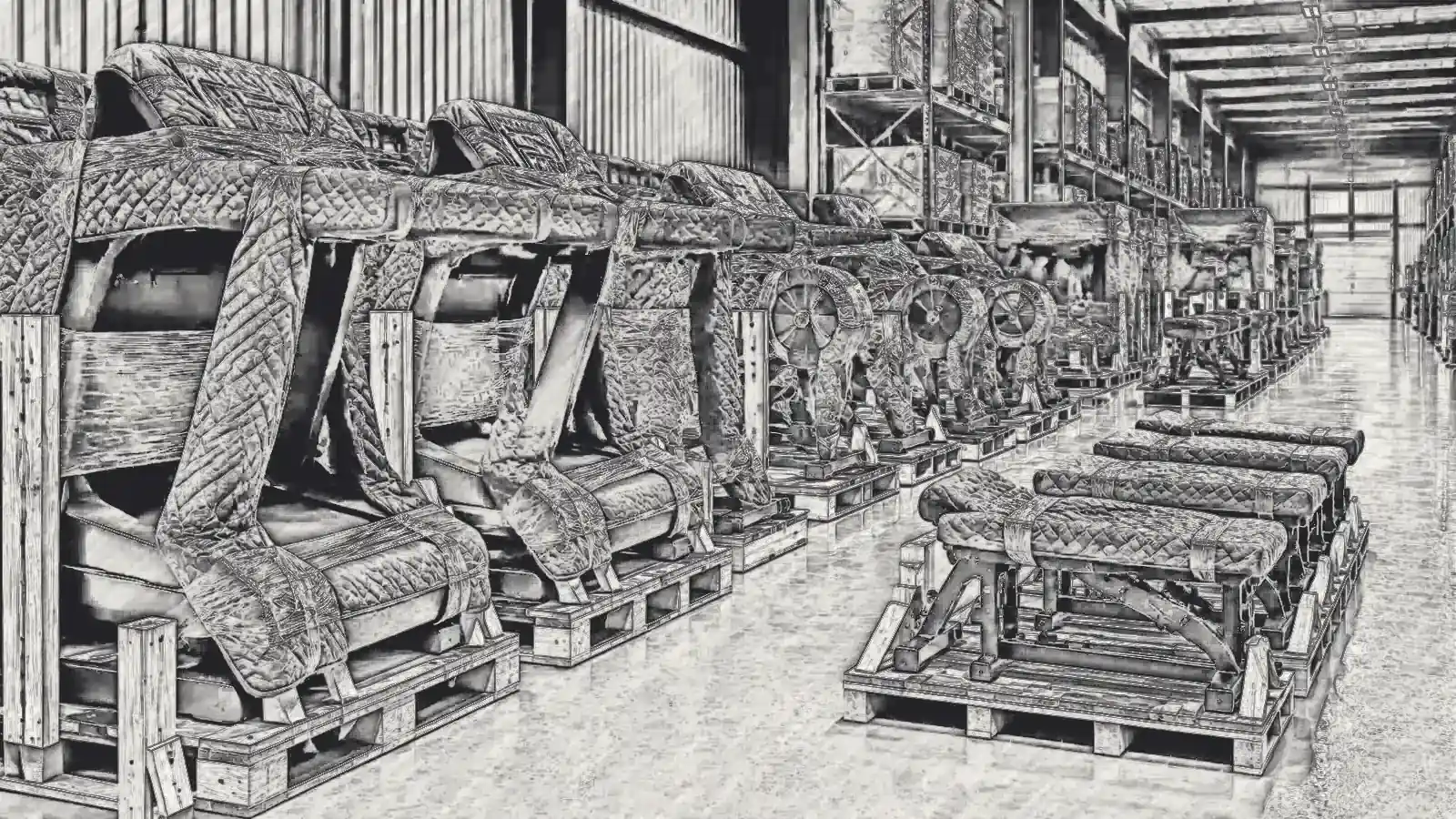
Clean equipment and allow it to dry fully before wrapping. Sweat, chalk and trapped moisture can contribute to corrosion during storage. Protect vulnerable finishes and displays without placing pressure on fragile controls. Secure moving parts and identify heavy or awkward components for the handling team. Keep the inventory updated as items are packed rather than trying to reconstruct it after loading. Distinguish transport preparation from servicing: dismantling a machine for movement does not remedy an existing fault. Record pre-existing damage and keep suspect equipment out of use when it returns.
Size dry palletised storage without relying on volume alone
Use a storage calculator as an initial planning aid, then have the actual inventory and access assessed. A container or pallet allocation depends on dimensions, weight, safe stacking and handling space, not just a total cubic volume. A dense pile of plates and a lightweight frame can have similar volume but very different loading requirements. Manufacturer restrictions and fragile consoles may prevent stacking that looks possible on paper.
GymMovers.co.uk can discuss dry, palletised storage appropriate to the equipment and planned return. Confirm the storage environment, protection arrangements and any specific manufacturer requirements rather than assuming a climate guarantee. Keep metal clear of damp surfaces and avoid enclosing moisture in wrapping. Ask how labelled components remain associated and how staged retrieval would work. Container sizing should be checked against the proposed load, with room for safe packing and retrieval. Do not convert an online estimate into a guaranteed allocation before the storage provider has reviewed the actual equipment.
Schedule a phased return and maintain the finished plan
For a phased return, decide which equipment must arrive first and whether the premises can receive it safely. Heavy frames may need to be positioned before smaller items fill the room. Confirm that floors, decoration, power provision and access routes are ready before delivery. Coordinate with contractors so that freshly returned machines are not exposed to avoidable dust, moisture or obstruction from ongoing works.
Reconcile every delivery with the inventory and check labelled parts and accessories before packaging is removed. Agree any installation or reassembly within the booked scope, and arrange appropriate checks before returning equipment to use. Update the final in-gym layout so that plate trees, dumbbell racks and bar storage support safe movement. Assign responsibility for keeping walkways clear and reviewing the arrangement when equipment changes. The plan should remain a practical working document: record additions, condition concerns and revised storage locations instead of treating the original drawing as permanently correct.
For the next step, use gym equipment storage, refurbishment decant planning, storage calculator and inventory builder. These pages help connect the equipment decision with the practical collection, storage or handling arrangements. Confirm any requirements specific to your premises before booking, and keep your inventory available when requesting an assessment.
What our customers say
Verified 5/5 Google feedback for Removals & Storage Experts Ltd (Removals and Storage X).
“I'm very happy with Removals and Storage Experts! They have always delivered the best service, even on a very short notice. I recommend this company at 100%.”
Claude · 6 years ago
“Prompt, friendly, efficient, and great price. Don't bother looking else where, pick removal and storage experts for your move and you won't regret it.”
Mitul · 5 years ago
“Excellent service. Good communication from Alex and her team. The collection was on time, professional and courteous. Highly recommended.”
Mark · 8 months ago