Bowflex: moving and installation guide

Bowflex equipment needs to be identified by its actual model before a move is planned, particularly when adjustable weights, separate stands and larger home exercise stations share the same room. The manufacturer's official manuals library covers Max Trainer equipment, treadmills, C7 bikes, SelectTech dumbbells, kettlebells, barbells and benches. Those categories provide a starting point, not permission to treat every item as having the same handling requirements. For equipment described as a home multigym, establish the precise identity rather than assuming a construction or dismantling method from the name. This overview from GymMovers.co.uk concentrates on keeping equipment and detached components together, assessing access and defining a practical installation handover. Within the Gym Manufacturers directory, it is intended for owners and operators arranging transport, storage or positioning, with model-specific decisions reserved for the matching manual and a competent crew.
Independent service notice
Independent service, not affiliated with Bowflex.
Start with identity, not a room description
A listing headed 'Bowflex home gym' may describe an entire collection rather than one machine. Begin by separating the principal exercise station, adjustable weights, benches and any other equipment into individual inventory entries. Photograph each identification label and the complete item before discussing transport. Record a serial number where available, without guessing missing characters. This avoids a survey being based on a familiar product photograph that does not match the equipment actually awaiting collection, especially when buying used equipment or clearing a mixed home gym.
The official Bowflex manuals library is useful because it distinguishes equipment classes that need different planning questions. A barbell and its supporting components are not interchangeable with a treadmill simply because both carry the same name. Obtain the actual model manual before relying on dimensions, weight or assembly information. Where identification remains uncertain, mark that uncertainty in the inventory and seek clarification before committing to handling arrangements. A directory overview can explain the planning process, but cannot establish an unidentified machine's transport configuration or component compatibility.
Treat a home multigym as a surveyed assembly
For an item described as a Bowflex multigym, the first task is to establish what that description means for the particular equipment. Do not assume a weight system, folding mechanism or removable frame section. Survey the assembled shape, its position in the room and the route to the collection vehicle, then compare those observations with the matching documentation. A machine installed before a room was furnished may no longer have the same accessible exit, even where neither the equipment nor the doorway has changed.
The useful question is whether the identified assembly can travel safely in its documented moving configuration, not how much can be taken apart. Appropriate dismantling may make a route workable, but unnecessary separation creates more components to protect and reconcile. For home gym moving, supply photographs showing the machine alongside nearby walls, doors and stairs. GymMovers.co.uk can help with planning, dismantling where appropriate and protected moving, subject to survey and agreed scope. Stair handling or lifting arrangements must remain assessment-led, rather than promised from photographs alone.
Keep detached multigym components traceable
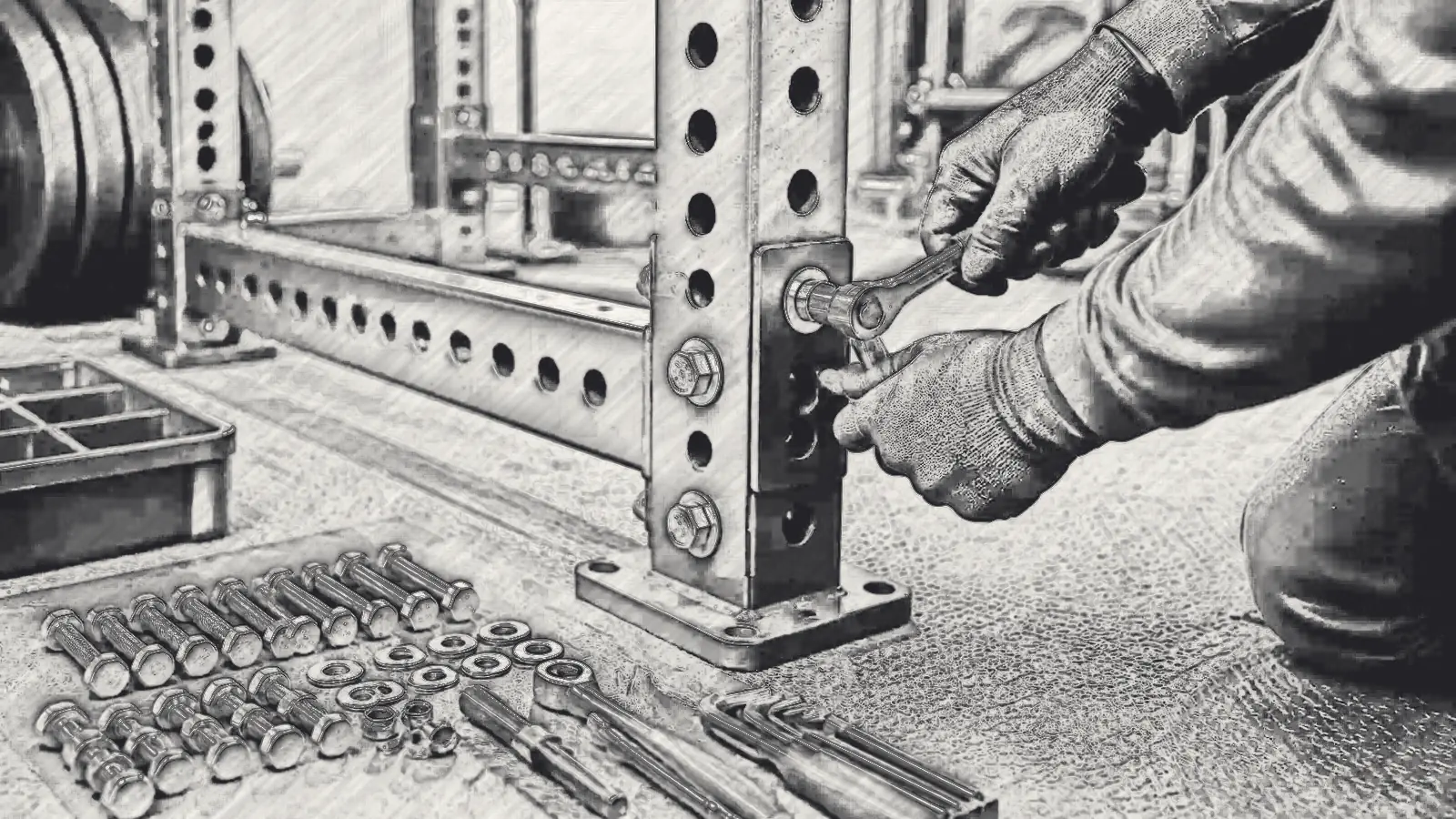
If dismantling is appropriate, the component record should follow the equipment through collection, transport and reassembly. Photograph the original arrangement and give each packing group an identifier connected to the main inventory entry. Any removed fittings should be contained and labelled for their original location, rather than collected in a communal hardware box. Exact removal steps, restraint methods and reassembly sequence belong to the matching manual and competent crew. This is particularly important where a detached piece looks ordinary but has a specific place in the assembly.
Separately stored accessories need the same attention as parts removed on moving day. Ask the owner to identify items kept in cupboards, garages or another training room, and distinguish confirmed components from pieces of uncertain origin. Do not fit an unverified part merely because it appears to align. An agreed gym equipment assembly scope should identify the machine, the components expected and any unresolved omissions. That gives the receiving crew a meaningful record instead of leaving them to reconstruct ownership from an assortment of unlabelled pieces.
- Link every component group to an equipment inventory entry.
- Photograph detached parts and their labels before packing.
- Record missing or uncertain items separately.
- Keep the matching manual accessible at delivery.
Match adjustable weights with their bases and stands
A compact adjustable weight still needs a complete inventory, because its base and stand are separate transport items rather than incidental packaging. Bowflex's official manuals cover SelectTech dumbbells, kettlebells and barbells, but that does not make their transport arrangements interchangeable. Identify each model and record the corresponding base and any stand. Where several sets are present, label their associations before anything is moved. Similar appearance is not sufficient evidence that a detached base belongs with a particular adjustable weight or that components can be exchanged.
Agree how each identified weight and its associated components will be supported and protected, using the relevant instructions rather than improvised assumptions about the adjustment system. Do not regard the base as a transport restraint without checking the documentation, or assume that a selection setting makes an assembly safe to carry. Keep inventory labels visible on the protective packaging so unloading does not require opening every package. At delivery, reconcile each weight with its recorded base and stand before arranging the training area or disposing of wrapping.
| Equipment group | Matching record |
|---|---|
| Adjustable dumbbells | Identify each unit and its associated base. |
| Adjustable kettlebell or barbell | Confirm the model and corresponding components. |
| Separate stand | Record which equipment it accompanied. |
Plan benches and stands as separate loads
Benches appear in the official Bowflex manuals library and should have their own inventory entries, even when purchased alongside adjustable weights. Establish the exact model before assuming that it folds, adjusts into a transport position or separates for access. Its protective packing and handling arrangements should account for the actual construction and documented moving requirements. A bench should not become an improvised carrier for other equipment simply because its upper surface looks convenient, and its presence should not conceal loose components during the collection check.
Stands deserve particular attention because they can arrive separately from the equipment they support. Label the intended association while keeping the stand's own identity distinct. Plan the destination layout around the complete grouping, including practical space to approach and use the equipment, checked against relevant documentation. Avoid placing stands wherever a gap first appears and discovering later that the intended weights are stored elsewhere. For an operator receiving several equipment groups, a simple room plan can preserve these relationships without suggesting that every stand or bench has universal compatibility.
Separate cardio planning from the weights inventory
A collection may also include a Max Trainer, treadmill or C7 bike, all categories represented in the supplied Bowflex manuals information. These should be surveyed separately from multigyms and adjustable weights. The Bowflex M6/M6i document specifically includes moving and levelling guidance, making it a relevant reference when that identity is confirmed. It is not evidence that another Max Trainer or equipment class should move in the same way. Obtain the matching document and assess access without extending one model's instructions across the collection.
For a treadmill, establish the documented transport configuration rather than assuming foldability or that built-in moving features will solve stairs and thresholds. The route assessment for treadmill movers needs the actual model information, doorway constraints and destination position. Apply the same identification-first approach to bikes and other cardio equipment, without guessing suitable lifting points. Keep any detached items associated with their parent machine. Movers can agree positioning and mechanical reassembly, but electrical commissioning is not part of that role and should not be implied by delivery completion.
Use storage to preserve complete equipment groups
Storage introduces another handover, which makes component matching more important rather than less. If the destination is not ready, decide which equipment groups must remain retrievable together. The inventory should show the principal item, separately packed parts and the location of its documentation. For adjustable weights, preserve the recorded relationship between weights, bases and stands throughout storage. Do not rely on collection-day memory or a photograph of the entire room: neither reliably identifies a small labelled package after several other loads have arrived.
Before arranging gym equipment storage, confirm the expected duration, retrieval sequence and any model-specific storage requirements in the relevant manuals. Agree protective packing and placement without assuming that equipment or its packaging can support stacked loads. If part of the collection will return first, organise it as a complete usable group rather than separating the main machine from the components needed for reassembly. Record visible condition at entry and departure, and keep uncertain or missing items on the record rather than allowing storage to obscure them.
Position equipment for the agreed installation scope
Destination planning should distinguish the space needed to deliver an item from the space needed to position and use it. Confirm the intended location before arrival, considering door movement, circulation and access to neighbouring equipment. Use the actual manual for equipment dimensions and any specified clearances; do not substitute an online photograph or a measurement from a similar model. Where floor suitability or another site condition is uncertain, obtain appropriate advice before delivery rather than treating successful passage through the doorway as proof of a suitable installation.
An agreed gym equipment installation plan can cover positioning and mechanical reassembly subject to survey, documentation and the specified equipment condition. It should state which items will be reassembled and what prevents completion, such as an unidentified component or missing fitting. Any levelling work must follow the relevant model guidance rather than a general Bowflex assumption. Movers do not perform electrical or clinical commissioning. Operators should arrange any additional checks required for their intended use separately, instead of treating the moving crew's handover as a broader approval.
Close the move with a component-led handover
At handover, work through the inventory by equipment group rather than simply counting packages. Confirm the principal assembly's agreed position, identify the associated adjustable weights, bases and stands, and reconcile any components detached for transport. Record the mechanical reassembly completed and any outstanding issue that limits the agreed outcome. Keep packaging until the component check is finished where practical. The owner or operator should receive a clear account of what was delivered and assembled, not an implication of manufacturer approval, servicing or readiness beyond the agreed work.
For further planning context, the Bowflex Knowledge Base provides reference guidance rather than an official manual or approved procedure. Read it alongside the matching manufacturer documentation, particularly when preparing an inventory or deciding what information to send for a survey. If equipment identity, access or detached components remain unresolved, list those questions before requesting a quotation. A useful written scope separates confirmed work from assumptions and explains how unresolved items affect collection, storage or reassembly, giving both parties a clearer basis for the move.
Documentation and sources
What our customers say
Verified 5/5 Google feedback for Removals & Storage Experts Ltd (Removals and Storage X).
“Prompt, friendly, efficient, and great price. Don't bother looking else where, pick removal and storage experts for your move and you won't regret it.”
Mitul · 5 years ago
“Excellent service. Good communication from Alex and her team. The collection was on time, professional and courteous. Highly recommended.”
Mark · 8 months ago
“I was extremely pleased with the service I received. The guys were friendly, hard working, and super careful with all my valuables. There wasn't so much as a scuff or scratch on anything. And all for a fair price. I really couldn't have asked for more.”
Ross · 5 years ago