Watson Gym Equipment: moving and installation guide

Watson Gym Equipment offers plate-loaded machines, benches, racks, platforms, dumbbells, barbells, selectorised and pulley stations, alongside custom options. Its equipment includes leg presses, hack squats and Smith machines. For owners organising a move, the useful distinction is between bulky structures that determine access and removable weights that need separate load planning. A machine name alone cannot establish either requirement, particularly where custom geometry is involved. This overview in the Gym Manufacturers directory explains how to prepare an equipment-specific brief rather than assume every strength machine travels in the same way. GymMovers.co.uk can help with planning, dismantling where appropriate, protected moving, positioning and mechanical reassembly, subject to survey and agreed scope. The starting point is identification: establish exactly what is present, which documentation matches it, and what the collection and destination routes will allow.
Independent service notice
Independent service, not affiliated with Watson Gym Equipment.
Identify the frame, not just the Watson name
Begin with an equipment register that distinguishes each Watson item rather than grouping everything under strength equipment. Record model and serial information where available, photograph identification labels, and obtain the matching manual for dimensions, weight and permitted assembly arrangements. Add photographs from several sides so the survey can distinguish the main structure from attachments and stored weights. Where documentation is missing, flag that uncertainty explicitly; a photograph of a similar machine is not evidence that the item has the same construction or transport requirements.
Custom options make the actual equipment geometry particularly important. A standard product description should not override measurements and photographs of the item being moved. Record projecting parts, its relationship to nearby equipment and any visible connection to the building, without loosening anything to investigate. Ask whether the supplied manual covers the configuration on site. Any proposed separation points must be established from suitable documentation and competent assessment, not inferred from visible bolts. This avoids planning around a frame outline that differs from the real machine.
- Record each item's identity and matching manual.
- Photograph actual geometry and projecting parts.
- Separate removable weights from frame inventories.
- Flag undocumented custom features before quoting.
Plate-loaded machines require two connected plans
For a Watson leg press, hack squat or another plate-loaded machine, assess the structural assembly and removable loading plates separately. The frame may govern door clearance and turning space, while the plate inventory affects the overall handling and vehicle plan. Do not assume that removing loading plates makes the remaining machine manageable by a particular crew or lifting device. Establish the documented machine weight and configuration, then have the handling method assessed against the actual route, available working space and destination conditions before booking.
Moving assemblies also need attention, but their securing arrangements are model-specific. The brief should identify the machine and request a documented transport method rather than prescribe how to restrain a carriage, lever or other moving part. Likewise, do not treat plate-loading or storage projections as lifting points unless the relevant instructions expressly permit it. A competent crew should determine protection, restraint and any appropriate dismantling before collection. Keep the agreed method linked to that particular item so a substitution or configuration change triggers another review.
Racks and Smith machines: clearance without assumptions
Racks and Smith machines deserve an access assessment that looks beyond their standing footprint. Door height, overhead restrictions and the space needed to change direction can determine whether an apparently straightforward route is workable. Record the complete installed outline, including attachments present on the day, and compare it with the matching manual. Never assume a rack folds or that a Smith machine can be reduced to convenient sections. Its permitted separation, support and transport orientation need confirmation before anyone commits to a handling method.
Selectorised and pulley stations need a different inventory emphasis from removable plate-loaded equipment. Where a station has an enclosed weight stack or connected cable arrangement, do not count those components as loose loading plates or propose removing them without model-specific guidance. Photograph the installed configuration and note attachments separately. The survey should establish what remains assembled and what, if anything, can be separated safely. This distinction prevents a quote based on loose-weight handling from overlooking the requirements of a connected machine assembly at collection.
Dense removable weights need a separate inventory
Removable plates need their own inventory because the frame list alone does not show the full load being collected, transported, stored and returned to use. Count them by marked mass and quantity, noting which machine or storage location they belong with. Record dumbbells by their markings and quantities too, making any missing pairs apparent before packing starts. Unmarked items should be flagged for verification rather than assigned a guessed weight. This produces a clearer transport brief than a photograph labelled simply as assorted weights.
Dense loads also change how packing and temporary staging should be discussed. A container that has spare volume may still be unsuitable for additional plates, so packaging and handling limits must govern its contents. Agree how weights will be restrained and kept from contacting finished frames or upholstery. Barbells need their own protection and restraint plan rather than being treated as convenient loose accessories. Keep labels readable and inventory groups identifiable so unloading does not leave the destination team sorting an anonymous collection of weights.
| Equipment group | Primary survey question |
|---|---|
| Bulky frames | What documented configuration can negotiate the route? |
| Removable weights | What quantities and verified loads require handling? |
| Barbells | How will length, restraint and protection be accommodated? |
Benches and platforms still influence the move
A bench may be less visually imposing than a leg press, but it still needs identification, protection and an agreed carrying configuration. Do not assume adjustment features make it foldable or provide suitable carrying points. Record its actual outline and any separate accessories, then check the relevant instructions before deciding how it travels. Protect upholstered surfaces from pressure and contact with metal equipment. Where several benches are involved, individual labels help ensure each unit and its associated parts reach the intended position without unnecessary reshuffling.
For platforms, establish the supplied construction and installed arrangement rather than assuming a single slab or a set of readily separable panels. Ask for documentation covering any assembly and record how the platform relates to adjacent racks and floor finishes. At a domestic destination, room access and the proposed equipment layout should be assessed together. Planning home gym moving around the complete training area helps avoid placing a platform first only to discover that its position obstructs the route needed for a larger frame.
Survey the route around the largest agreed assembly
The access survey should follow the equipment from its current position to its final location, not stop at the building entrance. Include corridors, thresholds, turns, stairs, lift entrances and the space available to prepare the load. Compare those constraints with the transport configuration established for each machine. Any proposed lift, hoist or other handling equipment needs its suitability confirmed for the specific load and site. Neither a photograph nor the fact that equipment previously entered the building guarantees that today's route is suitable.
For commercial gym relocation, agree a sequence that keeps large-frame routes clear while giving removable weights a controlled staging area. Confirm loading access, building permissions and restrictions with the responsible parties before scheduling. Floor suitability and any structural questions need appropriate assessment; movers should not infer capacity from the room's previous use. At both ends, define who will clear surrounding equipment and protect shared areas. A workable collection route is only half the plan if the destination layout prevents safe unloading or positioning.
Store complete equipment sets, not anonymous parts
If collection and installation are separated, plan gym equipment storage as part of the same equipment register. Each frame should remain linked to its labelled components, documented configuration and accessory inventory. Identify surfaces requiring protection, and agree appropriate supports and storage orientation through the handling assessment. Do not assume frames, benches or platforms can be stacked. The space requirement depends on the actual items and their safe storage arrangements, not simply the floor area they occupied when assembled in the gym before collection.
Keep removable plates and other weights traceable without concentrating them in an unassessed corner or container. Record what entered storage, its condition and where each group can be retrieved. If installation will happen in phases, organise release around the destination sequence rather than whichever items are easiest to reach. Documentation and labelled fittings should be available with the relevant frame at delivery. This reduces avoidable handling and helps prevent a machine arriving without the parts needed for its agreed mechanical reassembly at the destination.
Position first, then complete the agreed mechanical work
A destination plan should distinguish the space occupied by the equipment from the space required to use and access it. Check the matching instructions for relevant positioning requirements and confirm the actual configuration, especially for custom equipment. During gym equipment installation, proposed locations should be checked against the agreed layout before heavy assemblies are committed to position. Any anchoring requirements, floor questions or unresolved building interfaces must be allocated to the appropriate responsible party rather than assumed to be included in a moving quotation.
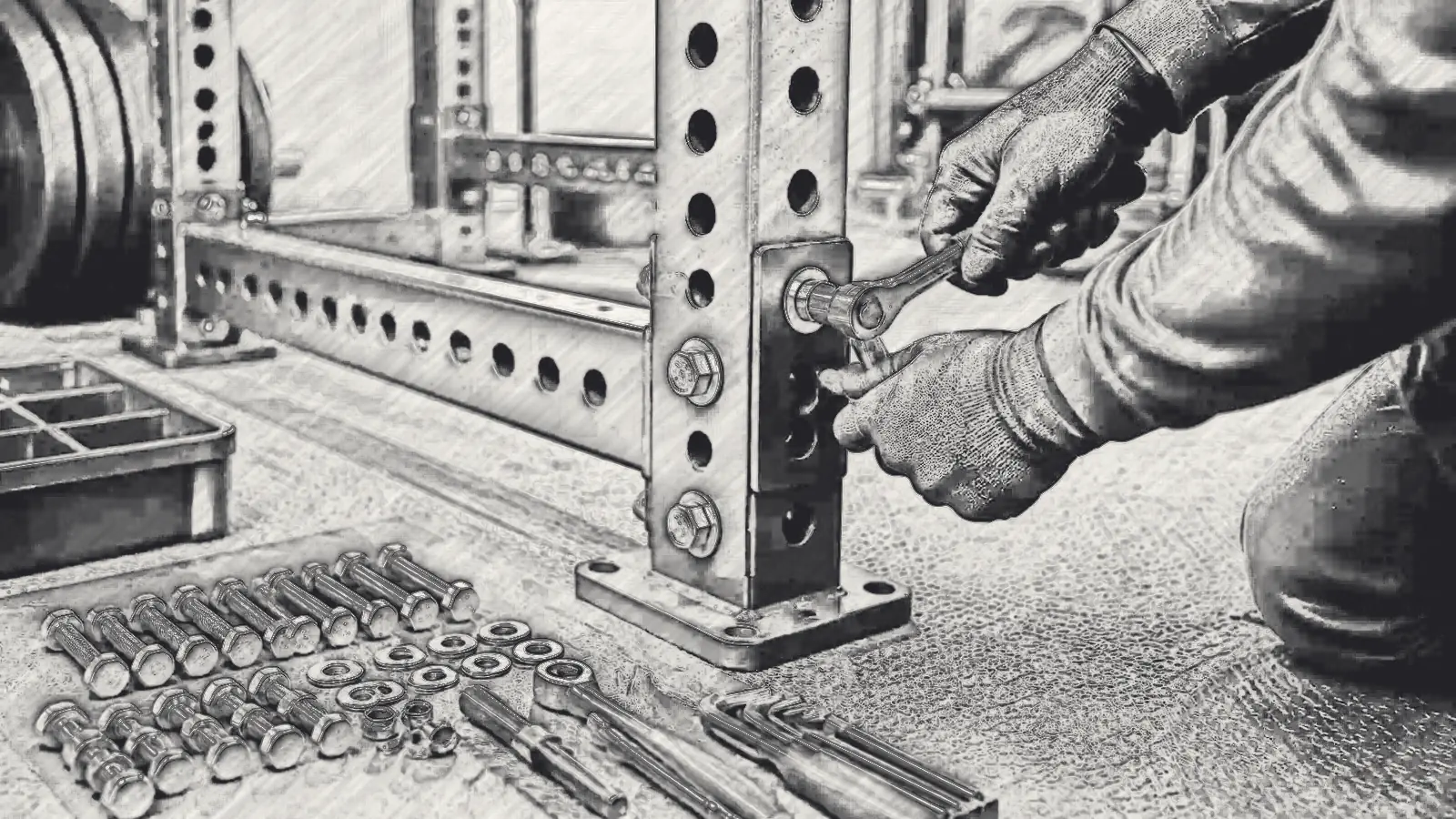
Where dismantling has been agreed, gym equipment assembly should follow the matching instructions and the recorded component identities. The written scope needs to state which mechanical reassembly tasks are included and what evidence or checks will be provided at handover. It should not imply manufacturer approval, warranty preservation or a broader commissioning service. GymMovers.co.uk does not perform electrical or clinical commissioning. If the required documentation, components or site conditions are unavailable, record the limitation and agree the next step instead of treating placement as completed installation.
Handover should reconcile frames, plates and paperwork
At handover, reconcile the delivered equipment against the collection register rather than checking only that the main frames are present. Confirm the plate quantities, dumbbell inventory, barbells, accessories and any components handled separately. Record final positions and compare visible condition with collection photographs, noting exceptions clearly. For equipment that has been mechanically reassembled, document completion against the agreed scope and identify anything outstanding. This gives the owner a usable record of what was moved and what remains to be resolved before the equipment returns to use.
The operator or home owner should retain the manuals, identification photographs and handover record together. Where further assessment is required, make responsibility explicit and avoid presenting a moved machine as ready solely because it stands in its intended location. Keep unresolved documentation, building requirements or specialist checks separate from completed transport tasks. A useful Watson moving brief therefore ends where it began: with identifiable equipment, actual geometry and an accountable inventory of dense removable weights, rather than a general promise to move a roomful of machines.
Documentation and sources
What our customers say
Verified 5/5 Google feedback for Removals & Storage Experts Ltd (Removals and Storage X).
“Excellent company. Highly recommend. From appointment for initial quote through packing and moving all involved were helpful, courteous and nothing too much trouble. Fair and competitive quote with no hidden or extra charges.”
Jude · 10 years ago
“Very impressive service. They were clear on costs from outset, competitively priced, flexible as our plans changed, meticulous packaging our stuff, friendly and efficient.”
Michael · 5 years ago
“Very prompt and quick service. Patryk is professional and the guys are very well mannered too. Any request I had was accommodated very well. Would use again.”
Tacc · 6 years ago