Indigo Fitness: moving and installation guide

Indigo Fitness, presented by the manufacturer as IndigoFitness, offers custom racks, rigs, storage, strength stations, dumbbells, plates and flooring. Its ability to alter equipment dimensions and designs to suit a room is particularly relevant when planning a commercial training-space fit-out: the configuration being delivered or relocated matters more than a general product description. This overview in the Gym Manufacturers directory considers how that equipment affects access, handling, installation and handover, rather than assessing performance or recommending a purchase. For operators coordinating suppliers, building contractors and delivery crews, the priority is a shared plan based on the actual equipment and premises. GymMovers.co.uk can help with planning, dismantling where appropriate, protected moving, positioning and mechanical reassembly, subject to survey and an agreed scope. Flooring should remain a separately defined work package, even when its programme overlaps with equipment delivery.
Independent service notice
Independent service, not affiliated with Indigo Fitness.
Define the actual IndigoFitness configuration before booking
Custom dimensions create a practical identification problem when equipment changes premises. A quotation or original room drawing may describe the intended installation without establishing what was finally supplied. Ask the owner or supplier for the as-built configuration, identifiable product references, any serial information available and the matching manual. Photographs should show the whole assembly as well as connections and labels. Where several racks or storage units look similar, identify them individually so the destination plan does not accidentally exchange components or allocate the wrong footprint.
Treat the equipment schedule as a working document shared between the client, supplier and moving team. Separate racks, rigs, storage, strength stations and loose dumbbells or plates instead of recording everything as one gym package. Confirm actual dimensions and weights from the relevant documentation; neither a photograph nor a category name establishes handling requirements. Record flooring separately, including who supplies it and who installs it. This gives every contractor the same starting point without suggesting that the movers have accepted responsibility for every element of the fit-out.
- As-built configuration, equipment identifiers and matching manuals.
- Documented dimensions and weights for each scheduled item.
- Named owners for flooring, access, receiving and handover.
Survey racks and rigs against the whole route
For custom racks and rigs, establish both the assembled configuration and the proposed transport configuration. An installation that suits its existing room may still present difficult turns, restricted doorways or awkward transitions at the destination. Survey the route from unloading point to final position, including changes of level and any shared corridors. If a goods lift is proposed, its suitability needs checking against the documented load, component arrangement and building restrictions. Do not assume that an available lift can accommodate the planned movement.
The decision to move an assembly intact or dismantle it should follow the matching manual, condition assessment and a competent crew's handling plan. There is no basis for assuming universal foldability or a standard breakdown sequence across custom equipment. Keep connection records and identified components linked to the particular assembly without prescribing a generic method for releasing fixings. Where an existing installation involves building attachments, establish responsibility for their assessment and any making good. Include those boundaries in the commercial gym relocation brief.
Plan loose weights and storage as separate loads
Dumbbells and plates need an inventory and handling plan distinct from the storage equipment that holds them. Record quantities and identifying markings, then establish documented weights rather than estimating the shipment from the number of shelves. Do not presume that a storage unit can travel while loaded simply because it supports weights in normal use. Agree the transport arrangement through the survey and relevant instructions. Receiving staff also need to know how the loose items will be counted without obstructing the next delivery.
For custom storage, check the actual internal arrangement and its intended position in the new layout. It may have been designed around a particular room, so reusing it elsewhere requires more than finding an empty wall. Plan where protected loose weights can wait while storage is positioned and mechanically reassembled as appropriate. Any temporary holding area needs an assessment of its loading and access implications; do not concentrate the entire delivery in one convenient corner without checking that arrangement with the responsible site team.
| Equipment group | Planning priority |
|---|---|
| Dumbbells and plates | Count, identify and agree handling loads. |
| Storage | Verify configuration and destination position. |
| Racks and rigs | Confirm route and transport configuration. |
Keep flooring and equipment installation coordinated but separate
Flooring appears within IndigoFitness's supplied equipment categories, but its delivery and installation should be a separate scope in the project plan. Establish who prepares the receiving surface, installs the flooring and declares it ready for equipment movement. The moving team should receive the flooring contractor's relevant access and protection requirements before work begins. Do not select a delivery date on the assumption that a newly laid surface is immediately available. Readiness depends on the specified floor system and the contractor's instructions, not the equipment timetable.
Agree the final layout before positioning substantial assemblies, while preserving access needed by other trades. Where an equipment design calls for anchoring or another building interface, identify the responsible competent party and obtain the relevant requirements; neither the floor finish nor a layout drawing proves suitability. The gym equipment installation scope should describe positioning and mechanical work clearly, with exclusions for unagreed building work. If other contractors require electrical or specialist commissioning, retain those tasks with them rather than treating delivery completion as permission to operate.
Sequence strength stations and mechanical assembly
Strength stations belong on the schedule under their actual product identity and configuration, not merely as strength equipment. Obtain the matching manual before deciding what can be separated for transport or what needs protection. A broad category does not establish how an individual station is built. Compare its proposed arrival position with the assembly area and final position: placing a large item too early may block the route for another. The sequence should come from the surveyed layout rather than an assumption that everything can arrive together.
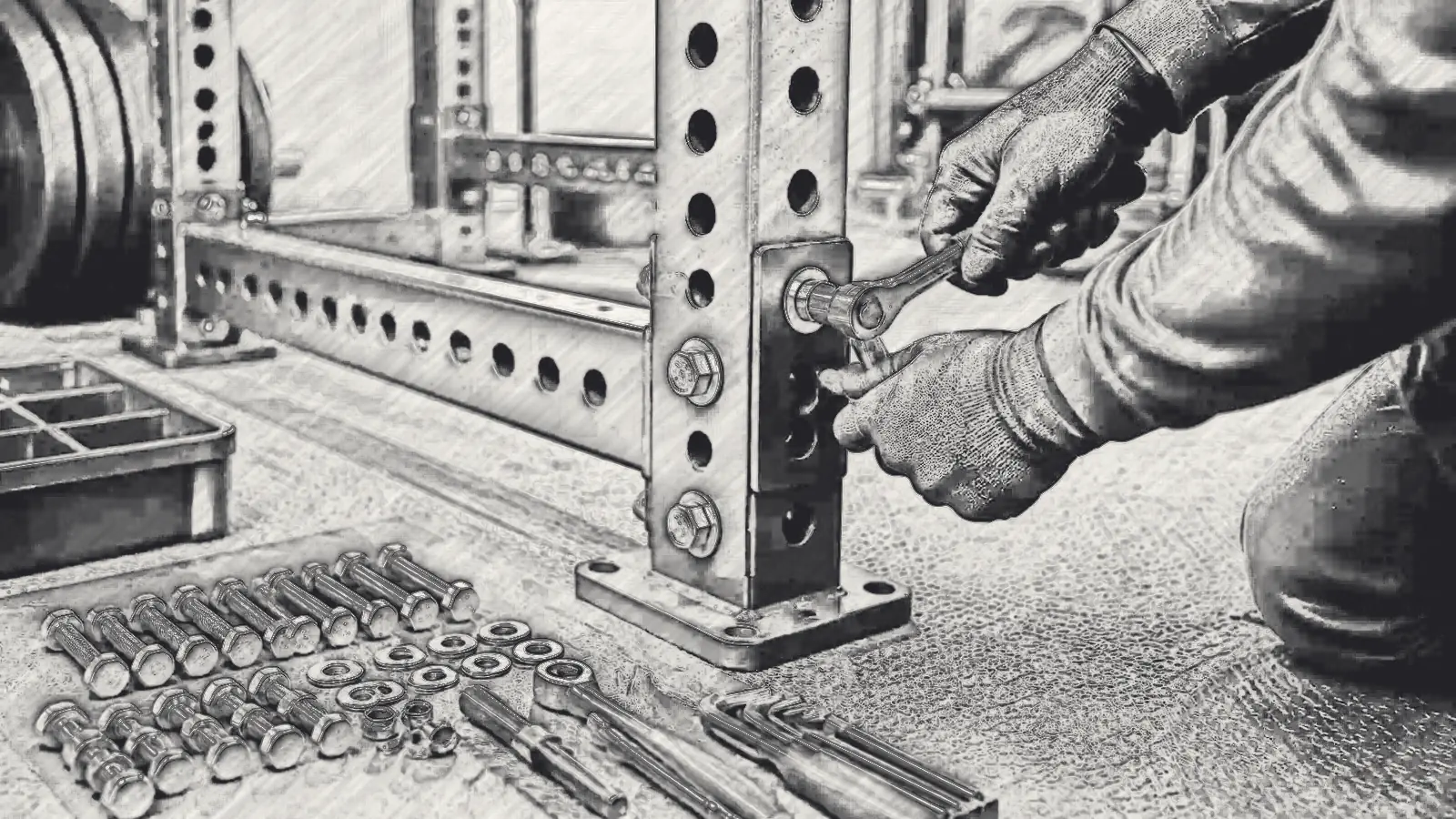
Allow a defined working area for the competent crew, with components kept identifiable and separate from unrelated deliveries. Clarify whether supplier-delivered items arrive assembled, partly assembled or as components, and reflect that in the agreed gym equipment assembly work. Mechanical reassembly is not a substitute for missing instructions or unresolved design information. If documentation does not match what arrives, record the discrepancy and refer it to the client or supplier before extending the work. This prevents an access problem from becoming an improvised installation decision.
Use storage to manage delays without losing configuration records
A delayed room handover can make temporary storage useful, but the decision should be made before the delivery vehicle reaches an unavailable site. Establish which items would enter storage, their condition on receipt and how each component remains associated with its parent assembly. Custom rack or rig parts need clear identification because visual similarity is not evidence of interchangeability. Keep manuals, packing records and the as-built schedule accessible to the project team rather than buried with equipment that may need to be retrieved in stages.
When considering gym equipment storage, agree protection, access and release arrangements for the actual consignment. Do not assume that every item can be stacked or that all components can be collected independently of the surrounding load. Plan retrieval around the installation sequence, especially where storage units must be positioned before loose weights are brought into the room. Record who can authorise release and whether the destination needs another access check after building works. Additional handling should remain visible in the schedule and written scope.
Apply the same discipline to smaller and home installations
A home customer buying or relocating IndigoFitness equipment still needs configuration-led planning, particularly if the equipment was originally designed for a different room. Check the route through the property independently of the intended training area. A suitable final footprint does not establish that an assembled rack or storage unit can negotiate the entrance. For home gym moving, share photographs and documentation early, then confirm what requires an on-site assessment. Avoid planning around assumed dismantling options that have not been checked against the actual equipment.
Smaller projects can still involve several parties: the seller, buyer, building manager, flooring contractor and moving crew may each control a different decision. Name the person who confirms collection readiness and the person who accepts delivery, even if they are the same customer. Establish whether the destination is ready for final positioning or only temporary holding. If the equipment identity or instructions remain uncertain, resolve those points before agreeing mechanical reassembly. A modest quantity of equipment does not remove the need for a documented scope.
Make handover an evidence-based project milestone
At handover, reconcile the delivered equipment against the schedule and record its final location, visible condition and any outstanding items. Separate missing components, unresolved documentation and unfinished work by other contractors rather than grouping them under a general completion note. The receiving representative should understand precisely what the moving crew has completed. Where mechanical reassembly forms part of the contract, record that work against the identified equipment. Do not describe positioning alone as a complete installation or imply that every project responsibility transfers with delivery.
Keep the final layout, manuals, configuration records and agreed exceptions together for the operator or owner. Any required checks outside the moving scope should have a named responsible party and a clear status before equipment is released for use. This is particularly important where flooring, building interfaces or specialist work have separate contractors. A useful handover closes the transport and mechanical tasks actually commissioned while making remaining responsibilities visible. It should leave the customer with an accurate record, not an unsupported promise of manufacturer approval.
Documentation and sources
What our customers say
Verified 5/5 Google feedback for Removals & Storage Experts Ltd (Removals and Storage X).
“Very profesional team! This guys make the move enjoyable.”
Marcin · 10 years ago
“Patryk (in the office) was really helpful and offered the best quote that I had (from four). Alex and his two colleagues were fantastic. They were friendly, got on with the job and very polite. I will definitely use them again.”
Alice · 6 years ago
“Excellent service from initial enquiry through to packing and taking our furniture into storage. Very professional staff throughout our whole experience. Would highly recommend this company.”
Margaret · 5 years ago